Construction Site Concrete Washout: Containers and Containment Best Practices
CleanSite sets up a designated concrete washout area on your construction site and keeps it serviced from the first pour to the last. The super points trucks at the container, and we handle delivery, pick-ups and disposal.
- EPA, NPDES and BMP compliant
- Delivery, pick-up and disposal handled
- Containers and pans from 1.5 to 9 cubic yards
One less thing on the super’s list
SWPPP upkeep is easy to push down the list until an inspector shows up. Washout is one of the first things they check.
With CleanSite, the washout area is a service, not a chore. The container is watertight, we move it when the work moves, and it leaves full on our truck.
A washout containment area set up right
Right spot
Close to the pour, where your trucks can reach it, and away from storm drains and water.
Contained
A watertight container instead of a pit, so wash water can’t leach into the soil.
Emptied in time
Call us when it’s getting full and we’ll pick it up as fast as we can.
How it runs from first pour to closeout
| Stage | What CleanSite does |
|---|---|
| Footings and foundations | Deliver a pan near the first pours; our boom truck can set it on soft ground |
| Slabs and decks | Add a second pan or a bigger container for heavy pour days |
| Ongoing pours | Pick up full containers and swap in empty ones as you call |
| Flatwork and sidewalks | Move the pan closer to the work when you call |
| Closeout | Final pick-up. No pit to dig out, backfill or regrade |
Before delivery, go through the site access checklist.
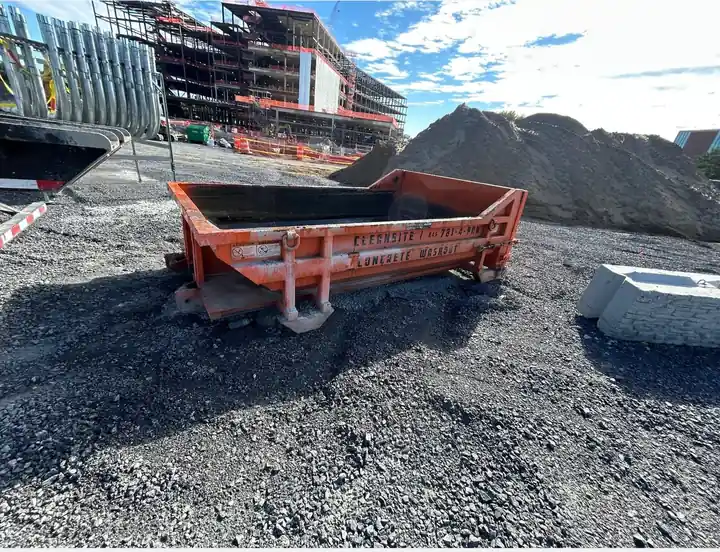
What a serviced washout area looks like
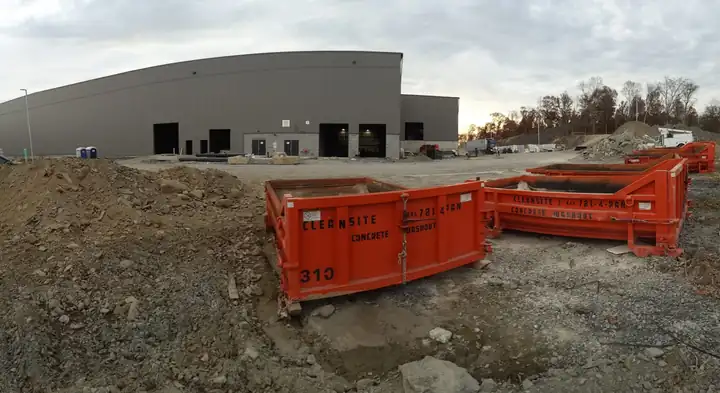
It’s one container, set where every truck can reach it, with the washout held inside until we take it away. On bigger jobs it’s a row of them, so more than one truck can wash out at a time.
Concrete washout best practices for construction sites
- Use a watertight washout container or lined facility. Cement, slurry and wash water can’t be allowed to reach stormwater or groundwater.
- Size it for the pour. Chutes, hoppers and tools all go in, so plan for every washout activity, not just the trucks.
- Keep it away from drains and surface waters. Follow your SWPPP.
- Use one spot. Every trade rinses in the same place, stucco and masonry crews included.
- Get it emptied before it’s full and before heavy rain.
Bag-lined washout bins work for small jobs you manage yourself. A serviced container is the better fit when you want washout containment handled for you.
Why not just dig a pit?
A dug pit needs an excavator, a liner and a crew, and it has to be dug out and filled at the end. Washout that gets buried instead can leave a dead patch where nothing grows.
The full comparison: concrete washout pan vs. lined washout pit.
Job site washout FAQ
Where should the concrete washout go on a construction site?
Near the pours, where trucks can reach it, on firm ground and away from storm drains, ditches and water.
Is a concrete washout required on every site?
New York’s erosion control standard says washout facilities shall be provided for every project where concrete is poured on site. New Jersey’s permit bans washout outside designated areas.
What do inspectors look for?
A designated, contained washout area, no washout on the ground or in drains, and a container that isn’t overflowing.
Related pages
Request a concrete washout container
Tell us the jobsite, the pour date, the expected yardage and whether you have ready-mix trucks, a pump or both. We will match the size and set up delivery.
Send us your job details
We’ll call you back with a container size and delivery time. In a hurry? Call 845-781-4-PAN.