How Concrete Washout Service Works for Contractors
You call with the jobsite and pour date, we deliver a watertight container, your trucks wash out into it, and we pick it up when it’s full. That’s the whole CleanSite service, and it’s only four steps.
Tell us about the job
Call 845-781-4-PAN or request a quote. These five details let us pick the right container and schedule the drop:
- The jobsite address or ZIP code
- The first pour date and roughly how many pours after that
- Ready-mix trucks, a concrete pump, or both
- About how many yards you’re pouring, and how many trucks per pour day
- Anything tight about access: a narrow driveway, a city lot, overhead lines
Not sure about the size? Our sizing guide walks through it.
Why contractors need a washout system at all
Concrete wash water is caustic, corrosive and highly alkaline, with a pH near 12 and toxic metals, according to the EPA. If it runs off the site in rain or soaks into the ground, it can contaminate soil and water, which is why construction activities need a contained washout area and why discharging it breaks stormwater permits.
Some crews try a lined dumpster or a dug pit onsite. The CleanSite service replaces both with a watertight container that leaves the site full, so there’s nothing to dump or dig up later.
Delivery, washout, pick-up
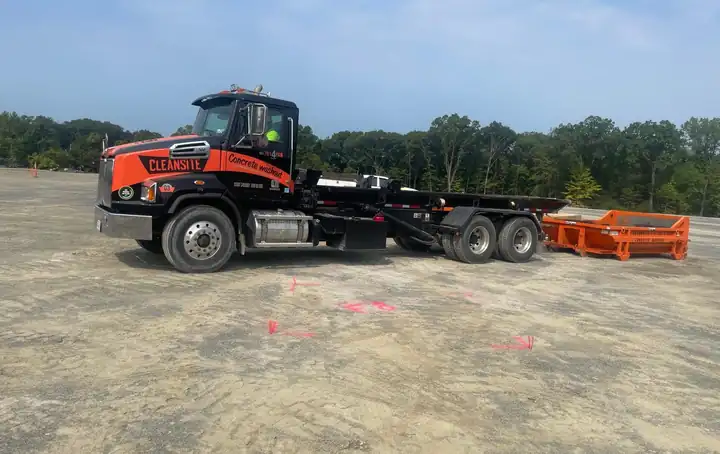
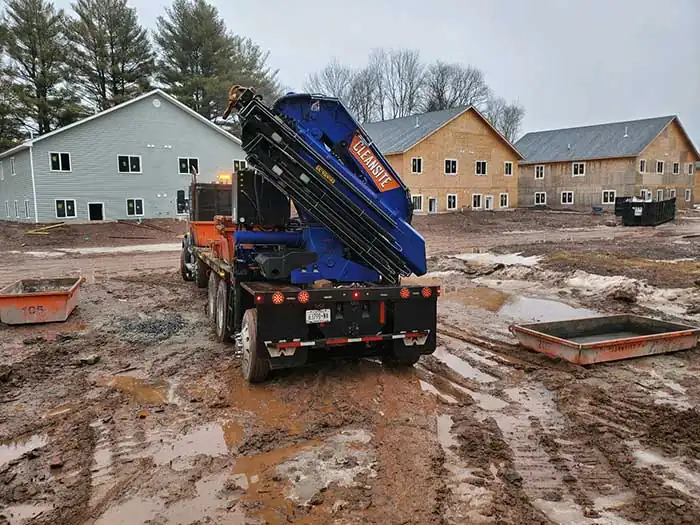
We deliver the container
We set it where your trucks can reach it. The small pans fit tight spots, and the 1.5 yard pan slides under a pump truck hopper.
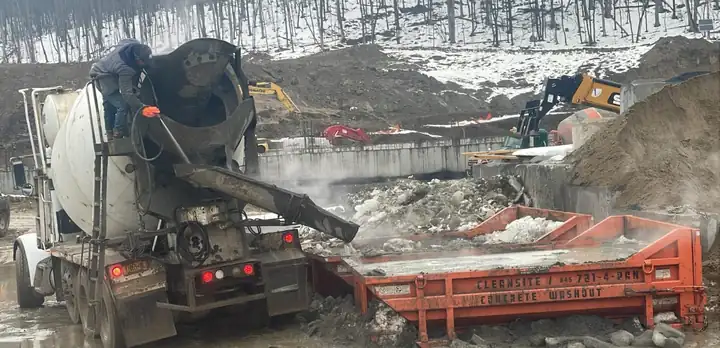
Your trucks wash out
Ready-mix drivers rinse their chutes into the container and pump operators empty the hopper into the pump pan. The washout stays contained and off the ground.
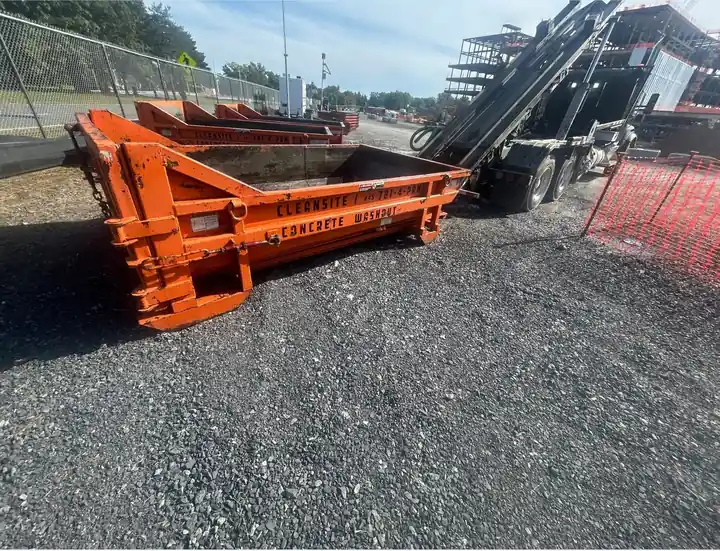
We haul it away
When it’s getting full, call us. We pick it up, take it off site and handle the disposal.
Where the container goes
You’ll want the container where the trucks can back up to it without blocking the pour, on firm, level ground, away from storm drains and water. For pump work, the 1.5 yard pan sits right under the hopper.
Full placement tips are in the site access checklist and pump pan placement guide.
During the pour
Drivers rinse their chutes into the container before they leave. Pump operators empty the hopper into the pump pan at the end.
Pick-up, swaps and disposal
Call when it’s getting full, or before a big pour day, and we’ll pick it up as fast as we can. If more pours are coming, we swap the full container for an empty one.
After pick-up, the disposal is on us. See when to swap a washout container and concrete washout disposal.
How it works FAQ
How do concrete washouts work?
A watertight container sits where trucks can reach it. Crews rinse chutes, hoppers and tools into it, the solids settle and harden, and the container is hauled away full so the washout never touches the ground.
When should a concrete washout be emptied?
Before it gets too full to take the next day’s washouts. Call for a pick-up as it gets close, and always before a big pour. Our swap guide covers the signs.
How fast can I get a container?
Give us a call at 845-781-4-PAN with the jobsite and the pour date, and we’ll set up the delivery.
Related pages
Request a concrete washout container
Tell us the jobsite, the pour date, the expected yardage and whether you have ready-mix trucks, a pump or both. We will match the size and set up delivery.
Send us your job details
We’ll call you back with a container size and delivery time. In a hurry? Call 845-781-4-PAN.