Concrete Washout Requirements in New York: Containment and Compliance
In New York, concrete washout water can’t be discharged from a construction site: it has to be contained, kept out of soil and water, and removed. The state’s construction permit bans it as a discharge, and the state’s erosion control standard calls for a washout on every job that pours concrete.
New York washout rules at a glance
- SPDES Construction General Permit GP-0-25-001 (effective January 29, 2025 to January 28, 2030) lists “wastewater from washout of concrete” as a prohibited discharge.
- The NYS Standards and Specifications for Erosion and Sediment Control (the “Blue Book”), Concrete Truck Washout, call for a washout facility on every project where concrete is poured on site, and say wash water must never infiltrate the soil or reach surface water.
Sources: NYSDEC GP-0-25-001, Part I.C.1.a; NYS Blue Book (Nov. 2016), p. 2.24.
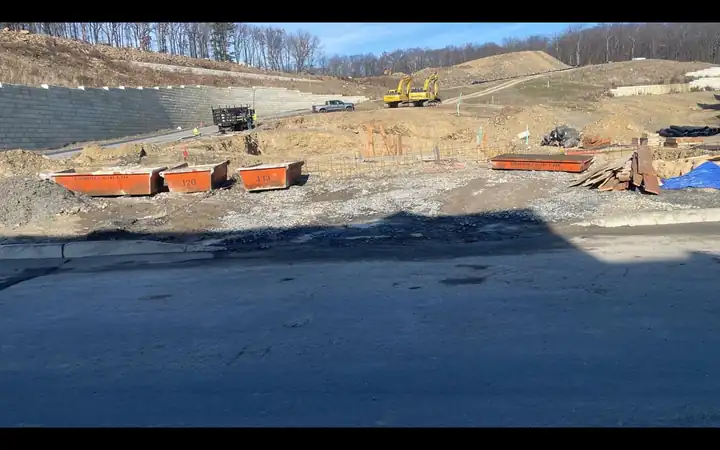
Concrete washout containment on a New York job site
Concrete washout water is the rinse from mixer chutes, pump hoppers and tools. The EPA describes it as caustic, with a pH near 12. If it runs into a storm drain or catch basin, it goes straight to the nearest waterway, and if it soaks into the ground it can leach into the soil. That’s why New York lists it as a prohibited discharge and wants it held in containment until it leaves the job site.
For concrete work on construction projects, compliance comes down to one thing: every chute, hopper and tool rinse goes into the washout, and nothing overflows.
Source: EPA Stormwater BMP: Concrete Washout.
Meeting New York’s washout rule with a container
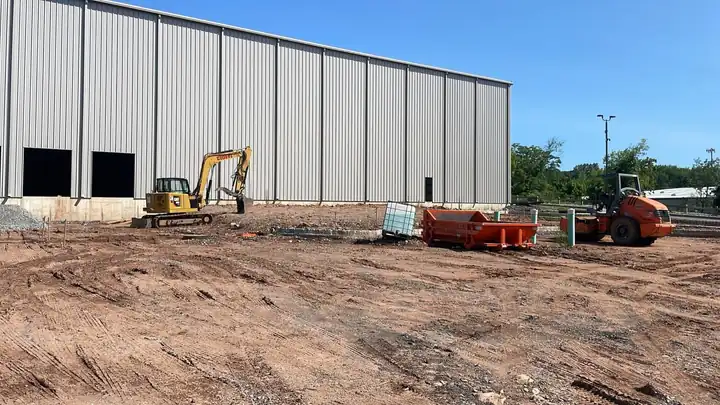
New York’s rule is about the result: the washout stays contained and never reaches the soil or the water. A watertight washout container does that from the first pour. We deliver it, your ready-mix and pump trucks wash out into it, and when it’s getting full you call us and we pick it up as fast as we can, haul it away and handle the disposal.
How to keep a New York washout area compliant
New York’s permit sits under the federal Clean Water Act’s NPDES program, and a violation can mean a notice of violation and project delays. The practical steps are the same on every job site:
- Set up a washout area for every project that pours concrete, and show it in your SWPPP.
- Contain the concrete washout water in a pit or watertight container that won’t overflow.
- Get it emptied before it can overflow.
- Dispose of the hardened slurry properly.
A CleanSite container takes care of the containment and the disposal, which leaves the crew with a lot less to keep up.
DEC regions
NYSDEC Region 3 covers Dutchess, Orange, Putnam, Rockland, Sullivan, Ulster and Westchester counties. Your SWPPP and local municipality may add their own requirements.
Source: NYSDEC regional offices.
New York washout FAQ
Is a concrete washout required in New York?
Yes. New York’s erosion control standard says washout facilities shall be provided for every project where concrete is poured on site, and the state permit prohibits discharging washout water.
Does a washout container count?
The EPA’s construction permit allows a leak-proof container, and the goal of New York’s standard is full containment. CleanSite’s containers and pans are watertight.
Who handles the disposal?
We do. When the container is getting full, call us and we pick it up, haul it away and handle the disposal.
This page summarizes public rules and isn’t legal advice. Check your SWPPP and local requirements.
Related pages
Request a concrete washout container
Tell us the jobsite, the pour date, the expected yardage and whether you have ready-mix trucks, a pump or both. We will match the size and set up delivery.
Send us your job details
We’ll call you back with a container size and delivery time. In a hurry? Call 845-781-4-PAN.