Concrete Washout FAQ: Best Practices, Rules and Pricing
These are the questions contractors ask CleanSite most about concrete washout: container sizes, pick-ups, the rules, and what it costs.
The service
What’s concrete washout?
The leftover concrete, cement water and slurry that comes off chutes, pump hoppers and tools when crews clean them after a pour.
What does CleanSite do?
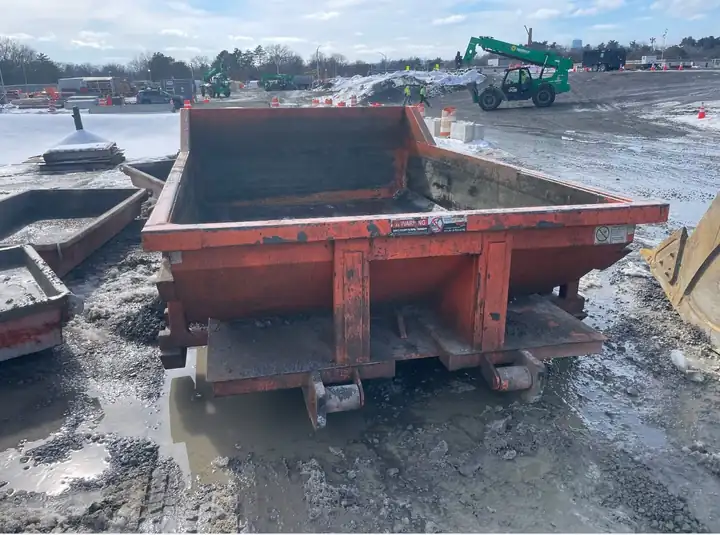
We deliver a watertight washout container to your site, your trucks wash out into it, and we pick it up full and handle the disposal. See concrete washout service.
How do I order?
Call 845-781-4-PAN or request a quote with the jobsite address, pour date, expected yardage and whether you have ready-mix trucks, a pump or both.
Where do you work?
See our service areas, or call with the jobsite address and we’ll tell you if we cover it.
Containers and sizes
What sizes do you have?
A 6 yard container (1,200 gallons), a 9 yard container (1,700 gallons), a 1.5 yard pan (300 gallons) and a 2.5 yard pan (475 gallons). See containers and pans.
Which size do I need?
It depends on the yardage and how many trucks are washing out. Heavy pour days need the 6 or 9 yard container. See the sizing guide, or call and we’ll size it with you.
Will a pan fit under a pump hopper?
Yes. The 1.5 yard pan is made to sit under a pump truck hopper.
Can the container be moved once it’s on site?
Yes. Call us and we’ll move it.
Pick-up and disposal
How fast can you pick up a full container?
Call 845-781-4-PAN when it’s getting full and we’ll pick it up as fast as we can.
When should I call for a pick-up?
At about three-quarters full, before heavy rain and before big pours. See when to swap.
Who handles the disposal?
We do. We haul the full container off your site and handle the disposal. See concrete washout disposal.
What can’t go in the container?
Trash, wood, rebar, paint, solvents, fuel and dirt. Only concrete washout.
Washout area best practices
Where should the concrete washout area go on a construction site?
Close to the concrete work, where trucks can reach it, on firm ground and away from storm drains, ditches and water. Follow your SWPPP.
Why can’t concrete wash water go into a storm drain?
Storm drains usually carry water straight to streams without treatment. Concrete wash water has a high pH, near 12 per the EPA, plus cement particles and sediment that harm aquatic life. Permits prohibit that discharge.
Can concrete washout soak into the ground?
It shouldn’t. New York’s standard says wash water must never infiltrate the soil, because it can carry alkaline wastewater toward groundwater.
Can washout water be left to evaporate?
In a contained pit or container, yes: the EPA’s guidance allows the water to be vacuumed off or left to evaporate. A container that gets picked up skips that step.
Do truck chutes and tools go in the same washout?
Yes. Chutes, hoppers, hoses and tools should all be washed out in the designated washout area.
Rules and compliance
Is concrete washout harmful?
The EPA says washout water is caustic and corrosive, with a pH near 12, close to liquid drain cleaner.
Is a washout required on my site?
In New York, the state standard calls for a washout facility on every project where concrete is poured. New Jersey’s permit bans washout outside designated areas.
Are CleanSite containers compliant?
CleanSite containers and pans are EPA and NPDES, BMP compliant. They’re watertight, so washout stays out of soil and drains.
Pricing
How much does it cost?
It depends on container size, how long it stays, the number of pick-ups and the jobsite location. See pricing.
Is a container cheaper than digging a pit?
Usually, once you count the excavator time, liner, daily upkeep and the dig-out at the end.
Related pages
Request a concrete washout container
Tell us the jobsite, the pour date, the expected yardage and whether you have ready-mix trucks, a pump or both. We will match the size and set up delivery.
Send us your job details
We’ll call you back with a container size and delivery time. In a hurry? Call 845-781-4-PAN.