Concrete Pump Washout for Line and Boom Pumps
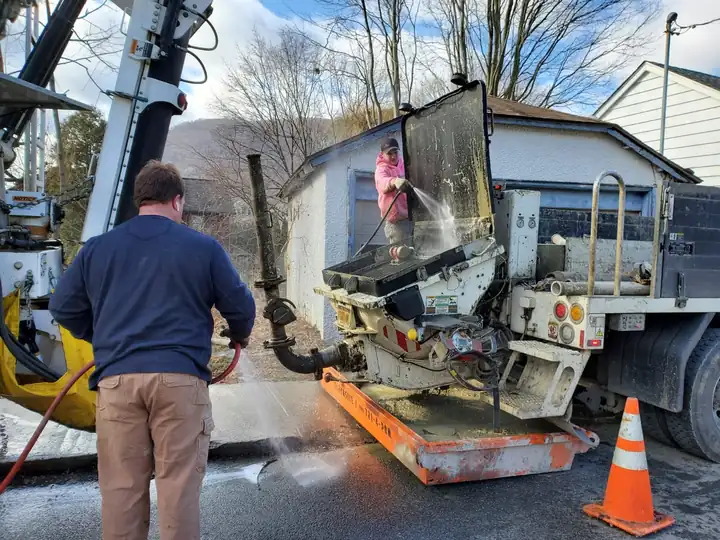
CleanSite’s 1.5 yard washout pan is low enough to sit under a concrete pump’s hopper, so the operator can clean out the hopper and line at the end of the day straight into it. We haul it away when it’s full.
- EPA, NPDES and BMP compliant
- Delivery, pick-up and disposal handled
- Containers and pans from 1.5 to 9 cubic yards
Why pump washout is harder than chute washout
A pump truck’s hopper hangs low at the back. The EPA notes that this low-hanging hopper can keep pump trucks from washing out into bale-lined pits. And a pump clean-out dumps a lot of material at once.
The hopper clean-out comes all at once at the end of the pour, so the pan has to be under the hopper and have room left in it.
Source: EPA Stormwater BMP: Concrete Washout.
A container that fits under the hopper
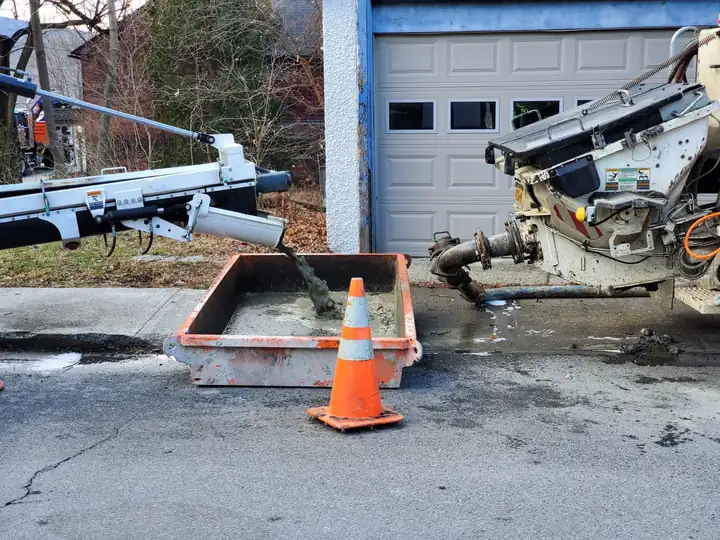
- Low profile. The 1.5 yard pan is the one that slides under a pump truck hopper.
- Watertight. The hopper and line washout stays in the pan, not on the ground.
- Moved when the pump moves. If the pump sets up somewhere new, call us and we’ll move the pan.
- Hauled away full. Call when it’s getting full and we pick it up.
Which pan for pump work?
The 1.5 yard pan (300 gallons) is the pump pan. It’s the one that fits under the hopper, for a line pump or a boom pump, one pour or several days in a row. When it’s getting full, call us and we’ll pick it up as fast as we can.
Ready-mix trucks don’t share it. The trucks feeding the pump rinse their chutes into their own container, set where they can back up to it. Call 845-781-4-PAN with the pump setup, the truck count and the yardage and we’ll set up both. Placement tips are in where a pump truck washout pan should go.
Washout bag, gravel pile or container?
Pump crews handle the clean-out a few ways. Some set a washout bag under the hopper, a lined bag that holds the wet concrete until it hardens. Others blow the line out onto gravel and leave a pile for the contractor to deal with. Both leave a mess: bags are hard to lift once full, and a pile on a driveway or lot is the customer’s cleanup problem.
A watertight container takes care of the dirty washwater and the concrete in one place. Handling is simple: CleanSite sets it, moves it if the pump moves, picks it up and disposes of it, so the responsibility for the waste doesn’t land on the pump operator or the customer.
Washout, not blowout
Operators say “washout” for cleaning the hopper and line into a container at the end of the day. A “blowout” is when concrete or forms fail during the pour. CleanSite pans are for the washout, so the clean-out has somewhere legal to go.
Pump washout FAQ
Is a concrete pump washout required?
Pump clean-out water counts as concrete washout, so it has to be contained. New York’s permit bans it as a discharge.
How much washout does a pump hopper make?
More than a chute rinse, because the whole hopper and line get cleaned out at once, plus the leftover concrete. Call with the expected yardage and we’ll size the pan.
Can the ready-mix trucks use the same pan?
No. The pump pan is for the hopper and line clean-out. Ready-mix trucks rinse their chutes into their own container. Tell us the truck count and the yardage and we’ll set up both.
Related pages
Request a concrete washout container
Tell us the jobsite, the pour date, the expected yardage and whether you have ready-mix trucks, a pump or both. We will match the size and set up delivery.
Send us your job details
We’ll call you back with a container size and delivery time. In a hurry? Call 845-781-4-PAN.