Concrete Washout Area Checklist: Site Access and Best Practices
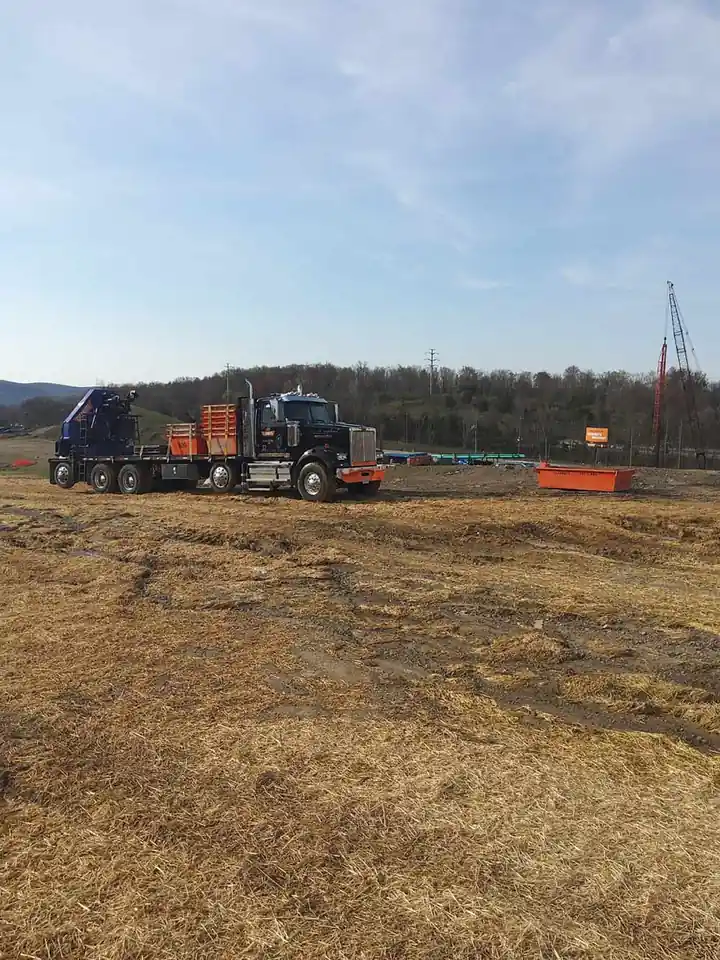
Before we deliver a washout container, there are four things you’ll want to check: a truck can reach the spot, the ground is firm, the spot is clear of drains and water, and trucks can back up to it during the pour.
Site access checklist
| Check | Why |
|---|---|
| Truck access: a path for our truck to the drop spot | So we can deliver and pick up without moving your materials |
| Overhead: no low wires or scaffolding over the spot | Boom and roll-off trucks need clearance |
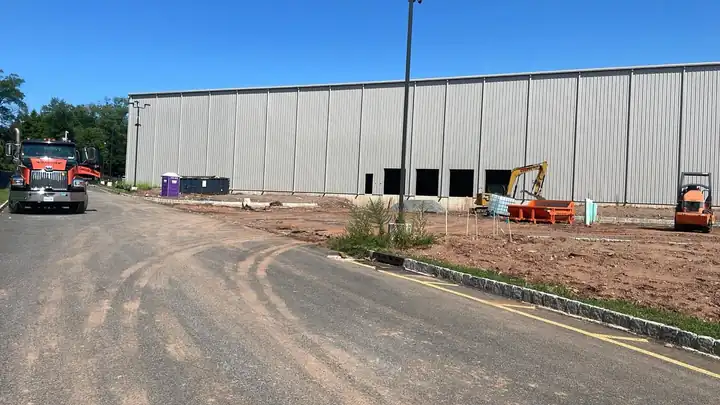
| Ground: firm and fairly level | So the container sits flat and we can set it and pick it up smoothly |
| Drains: clear of storm drains, catch basins and water | So washout can’t reach them |
| Truck reach: ready-mix trucks can back up to it | So drivers use it and don’t wash out on the ground |
| Pump setup: space under the hopper | For pump pours, the pan sits under the hopper |
Concrete washout requirements an inspector checks
Construction stormwater permits come from the Clean Water Act’s NPDES program. The EPA’s Construction General Permit (CGP), which applies where the EPA is the permitting authority, says concrete wash water must go into a leak-proof container or a leak-proof, lined pit designed so it can’t overflow from poor sizing or rain, located as far as possible from drainage features and storm drain inlets.
New York and New Jersey issue their own NPDES permits (GP-0-25-001 and 5G3), but the idea’s the same. When an inspector walks your concrete washout area, they look for:
- A designated washout area that every crew and concrete truck uses
- A watertight washout container or intact liner, with no washout water on the ground
- Room left in the container, so it can’t overflow
- Distance from storm drains, ditches and waterways
- Signs of dumping elsewhere: gray stains, hardened concrete waste, rinse water in a ditch
Sources: EPA 2022 Construction General Permit, Parts 1.3.1 and 2.3.4; EPA Stormwater BMP: Concrete Washout.
Best management practices during concrete work
The EPA’s guidance is to deal with a washout before it fills up, so the water doesn’t overflow. Concrete washout water is alkaline and caustic, with a pH near 12, so even a small spill counts. Keep the chute washout, tool rinse and pump clean-out all in the same contained spot, and keep your stormwater pollution prevention plan (SWPPP) records current.
What to tell us
- Jobsite address, gate or entrance to use, and a site contact’s phone
- Where you want the container, e.g. “north side of the slab, next to the pump”
- Anything tight: narrow drive, overhead lines, soft ground, street placement
- Pour date and time, the yardage, and ready-mix, pump or both
Ready? Request a quote or call 845-781-4-PAN.
Site access FAQ
What if our site is too tight for a truck?
Our boom truck can set a pan in spots a roll-off truck can’t reach, and the small pans fit tight spots. Tell us about the access when you book.
Where should you place a concrete washout?
Close to the pour, where trucks can reach it, on firm ground and away from storm drains and water.
Related pages
Request a concrete washout container
Tell us the jobsite, the pour date, the expected yardage and whether you have ready-mix trucks, a pump or both. We will match the size and set up delivery.
Send us your job details
We’ll call you back with a container size and delivery time. In a hurry? Call 845-781-4-PAN.