
What Size Concrete Washout Container Do I Need?
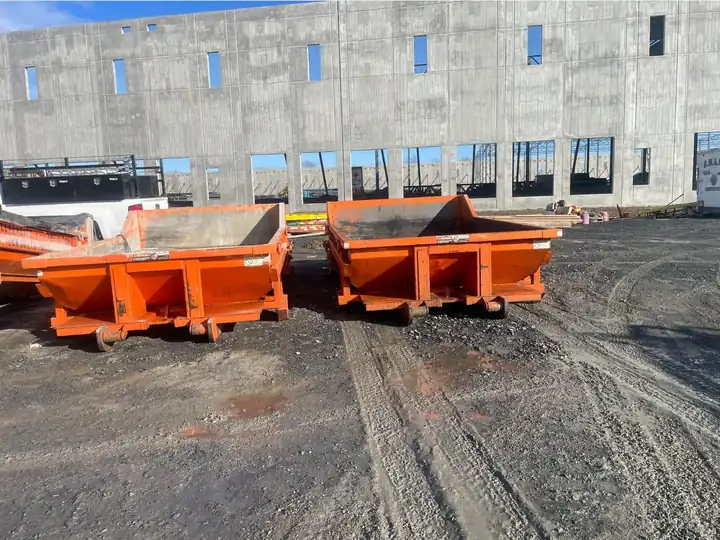
For most ready-mix pours a 2.5 yard pan is the right start. Go down to the 1.5 yard pan for a tight site or a single small pour, and up to a 6 or 9 yard container for steady truck traffic and heavy pour days.
Washout size by job
| Your job | Start with | Holds |
|---|---|---|
| Large sites, heavy pour schedules | 9 yard container | 1,700 gallons |
| Steady truck traffic, multi-day pours | 6 yard container | 1,200 gallons |
| Typical ready-mix pour | 2.5 yard pan | 475 gallons |
| Small pour, driveway, city lot, under a pump hopper | 1.5 yard pan | 300 gallons |
Not sure? Call 845-781-4-PAN with the yardage and the project and we’ll size it with you.
How to size a concrete washout
Two things fill a washout: wash water and solids. The water from a chute rinse adds up slowly. The leftover concrete is what really fills a container, and that changes from truck to truck, so there’s no exact formula.
The EPA’s guidance is to deal with a washout before it fills up, so leave headroom. For heavy pour days, use the bigger container. Call with the expected yardage and we’ll size it.
Whatever size you pick, the washout water can’t soak into the ground or run off to a storm drain or surface waters. A watertight container keeps it all in until it leaves the site.
Source: EPA Stormwater BMP: Concrete Washout, p. 5.
Four things that change the size you need
Pumps
The 1.5 yard pan is the one that fits under a pump hopper. The ready-mix trucks feeding the pump get their own container, so call with the yardage and we’ll size that one.
Pick-up rhythm
A smaller pan picked up more often can match a big one. Bigger containers mean fewer trips.
Space
If the lot is tight, the 1.5 or 2.5 yard pans fit where containers can’t. Under a pump hopper it’s the 1.5 yard pan.
Rain
Rain adds water. On an open container, leave headroom before a storm.
Sizing other washout systems: corrugated boxes, poly bins and pits
Plenty of job sites use a corrugated or poly washout box with a plastic liner. They’re sized the same way: count the washouts, leave room for rain, and don’t let the water overflow. The difference is who empties them. With a box you buy, your crew waits for the slurry to dry, then handles the cementitious waste.
A dug washout area is the biggest option on paper, but it takes room, digging and upkeep that a container doesn’t. Whatever you choose, it has to meet your SWPPP and stormwater management plan.
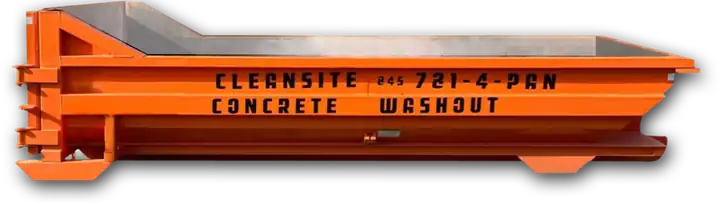
CleanSite containers and pans
Sizing FAQ
How big is a concrete washout?
CleanSite’s run from 1.5 cubic yard pans (300 gallons) up to 9 cubic yard containers (1,700 gallons). A dug pit takes far more room on the site.
What if I pick one that’s too small?
You’ll need more pick-ups. Call when it’s getting full and we’ll come get it, but sizing right saves trips.
Can I use two small pans instead of one big container?
Yes. Two pans let two trucks wash out at once and fit spaces a big container can’t.
Does a bigger container make a site more compliant?
Size doesn’t make a washout compliant; containment does. The EPA treats concrete washout as a stormwater best management practice: the washout water stays out of storm drains, drainage and groundwater, and the washout facility never overflows. Pick a size with headroom and call before it’s full.
Related pages
Request a concrete washout container
Tell us the jobsite, the pour date, the expected yardage and whether you have ready-mix trucks, a pump or both. We will match the size and set up delivery.
Send us your job details
We’ll call you back with a container size and delivery time. In a hurry? Call 845-781-4-PAN.